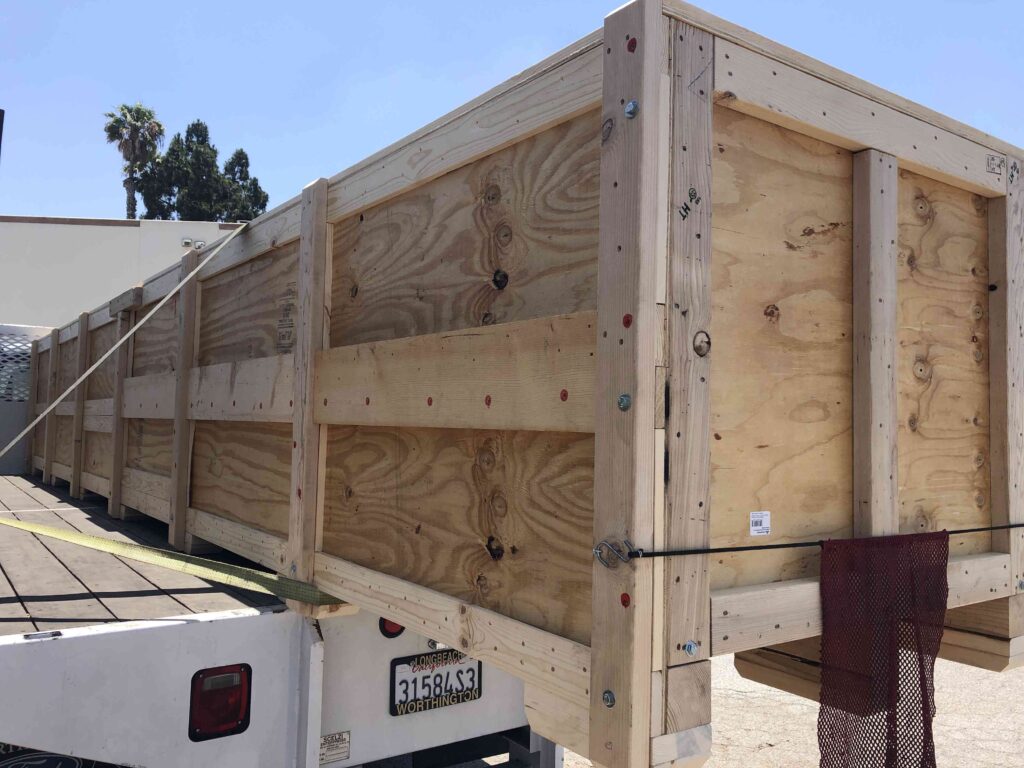
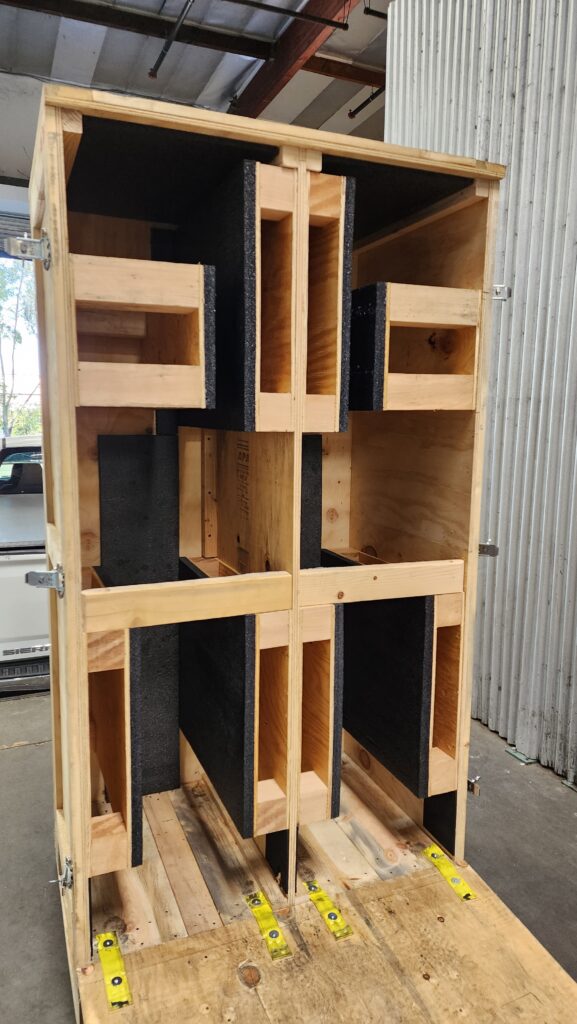
Note: MOQ Starting at 1 Crate, Scaling as Needed.
Moving large machinery, industrial components, or valuable business equipment requires packaging that can handle demanding transportation conditions. Heavy duty shipping crates provide a strong outer structure for products that are too large, heavy, or difficult to protect with standard cardboard packaging. For businesses in City of Industry, California, choosing the right crate helps organize shipments, secure equipment during handling, and prepare products for delivery to warehouses, distribution facilities, customers, and industrial locations.
BlueRose Packaging offers heavy duty shipping crates for businesses that need dependable protection for substantial loads and bulky items. Crate configurations can be selected according to the dimensions of the product, its weight, handling requirements, and shipping destination. Whether you are transporting machinery between facilities, sending industrial assemblies to a customer, or preparing equipment for long-distance freight, the appropriate crate design can support safer handling and more organized shipping operations.
Different shipments call for different crate structures. A compact industrial component may need a secure enclosed crate, while a large machine may require a reinforced base and additional internal supports. BlueRose Packaging offers shipping crate solutions that can be evaluated according to the cargo, transportation method, and intended use.
For companies sourcing heavy duty shipping crates in City of Industry, the most appropriate configuration depends on the actual cargo rather than weight alone. Product shape, center of gravity, lifting method, stacking requirements, and destination should all be considered before confirming a crate specification.
City of Industry supports a wide range of commercial, distribution, production, and industrial operations. Each sector handles different types of cargo, from large mechanical assemblies to valuable electrical systems and specialized equipment. BlueRose Packaging offers crate solutions that can be evaluated against these distinct shipping requirements.
| Industrial Machinery and Equipment Large production machines, mechanical assemblies, and replacement equipment often require a stable base and structural support throughout transportation. Crate planning should account for concentrated weight, lifting access, and the position of sensitive machine parts. • Reinforced support for bulky equipment • Internal blocking for movement control • Base configurations for material handling industrial machinery shipping crates City of Industry | heavy equipment crating | machine transport packaging |
Warehousing and Distribution Distribution operations move equipment, bulk supplies, and irregularly shaped inventory between storage facilities and business locations. Properly selected crates can help organize these shipments and simplify handling at receiving points. • Crates sized for warehouse equipment • Identification and shipment labeling options • Handling-friendly base designs warehouse shipping crates City of Industry | distribution equipment crating | bulk freight packaging |
Construction and Building Materials Construction suppliers transport substantial fixtures, hardware assemblies, specialty materials, and equipment to warehouses or project sites. Crates should be selected according to the cargo’s dimensions, surface finish, and loading conditions. • Support for bulky construction products • Separation for multiple components • Exterior protection during freight movement construction material shipping crates | building supply crating | job site equipment packaging |
| Electrical Equipment and Power Systems Electrical cabinets, control assemblies, power distribution components, and related equipment may need stable positioning and protection from impact during transit. Interior clearance and suitable restraint points are important design considerations. • Support for cabinet-style equipment • Protective separation for exposed components • Secure positioning during loading and unloading electrical equipment crates | power system shipping packaging | control cabinet crating |
Automotive Parts and Components Automotive suppliers frequently move engine components, assemblies, tooling, and heavy replacement parts between production sites and distribution locations. Crate interiors can be planned to reduce shifting and prevent parts from contacting one another. • Organized placement of heavy components • Separators for multiple parts • Support for irregular product profiles automotive parts shipping crates | vehicle component crating | heavy auto parts packaging |
Aerospace and Precision Engineering Large fixtures, precision assemblies, tooling, and specialized engineering equipment may require careful restraint and controlled handling. The crate should reflect the equipment’s lifting points, exposed surfaces, and sensitivity to movement. • Internal support for delicate assemblies • Clearance for protruding components • Identification for handling and orientation aerospace equipment crates | precision engineering crating | industrial tooling packaging |
| Medical and Laboratory Equipment Diagnostic systems, laboratory instruments, and large healthcare equipment can contain delicate parts that should remain stable during transportation. Appropriate cushioning and restraint depend on the item’s construction and handling instructions. • Protective interior spacing • Secure placement for sensitive equipment • Marking options for handling instructions medical equipment shipping crates | laboratory equipment packaging | diagnostic machine crating |
Printing and Commercial Production Printing presses, finishing equipment, production assemblies, and replacement machine parts may need substantial exterior support for freight transportation. Crate dimensions should accommodate machine projections, removable components, and service access requirements. • Structural support for production machinery • Space for separately packed accessories • Crate configurations for planned storage or transit printing equipment shipping crates | production machinery crating | commercial equipment packaging |
Metal Fabrication and Tooling Metalworking businesses ship dies, molds, machined parts, tooling assemblies, and heavy fabricated components. Crate design should account for sharp edges, uneven weight distribution, surface finishes, and secure placement. • Support for dense metal components • Separation between finished surfaces • Blocking options for irregular loads metal fabrication shipping crates | die and mold crating | heavy tooling packaging |
| Telecommunications and Networking Telecommunications cabinets, network infrastructure equipment, and large control assemblies may contain components that require stable positioning during delivery. Internal supports and suitable protective materials can be selected for the equipment configuration. • Crating for cabinets and rack assemblies • Interior protection for exposed sections • Shipment identification options telecommunications shipping crates | network equipment crating | communications hardware packaging |
Energy, Utilities, and Industrial Maintenance Maintenance teams and utility suppliers transport pumps, valves, meters, mechanical assemblies, and replacement equipment. Crates can be planned to accommodate unusual shapes, substantial weights, and handling requirements at multiple facilities. • Support for replacement equipment • Internal restraint for loose components • Configurations for planned freight handling utility equipment shipping crates | pump and valve crating | industrial maintenance packaging |
Furniture and Commercial Interiors Commercial furniture suppliers, fixture installers, and interior contractors may need crates for oversized furnishings, display structures, counters, and built-in components. Interior spacing can help keep finished surfaces apart during transportation. • Crating for large furniture assemblies • Surface separation and padding options • Protection for irregularly shaped fixtures commercial furniture shipping crates | fixture transport packaging | oversized furniture crating |
| Automation and Robotics Robotic arms, automated production units, conveyor modules, and material-handling assemblies often have projecting parts or specific positioning requirements. A suitable crate should allow for the equipment’s footprint, restraint points, and center of gravity. • Support for automation assemblies • Clearance around projecting components • Space for accessories and mounting hardware robotics shipping crates | automation equipment crating | conveyor system packaging |
Agriculture and Industrial Processing Processing equipment, commercial agricultural machinery components, and replacement assemblies may travel between suppliers, service centers, and operating facilities. The crate should reflect the load’s shape and the conditions expected during transit and storage. • Packaging for bulky machinery components • Restraint for detachable parts • Configurations for organized equipment delivery agricultural equipment shipping crates | processing machinery crating | farm equipment transport packaging |
Trade Shows and Commercial Displays Exhibition structures, reusable display units, demonstration equipment, and branded fixtures may move between venues or storage facilities. Crate planning can account for repeated handling, removable sections, and the need to repack items after an event. • Space for modular display components • Protective separation for finished panels • Reusable crate options where appropriate trade show shipping crates | exhibition equipment packaging | commercial display crating |
Heavy cargo presents different transportation challenges from ordinary parcel shipments. Its weight can place additional demands on the crate base, while uneven shapes or protruding components may require specialized internal support. Selecting a suitable crate helps businesses plan around these conditions before the shipment leaves the facility.
Crate performance depends on the quality of the design, materials, loading method, and actual shipping conditions. Heavy duty construction should not be treated as a substitute for appropriate load calculations, secure packing, or correct handling procedures.
Heavy duty shipping crates are useful when standard packaging does not provide the structure, dimensions, or handling support needed for a shipment. Businesses can select a configuration based on the product being moved and the destination’s receiving requirements.
A successful crate specification begins with an understanding of the entire journey. A shipment moving directly from a production floor to a nearby facility may have different requirements from one passing through several freight terminals before reaching its destination. Businesses in City of Industry can improve shipment preparation by reviewing loading conditions, transport arrangements, and receiving-facility limitations before ordering.
Measure the Cargo Before Ordering
Record the overall length, width, and height of the item, including handles, fittings, protruding parts, and accessories that will travel with it. Provide the total packed load weight when available. These details help determine the crate’s internal clearance, external footprint, and required structural support.
Plan for Loading and Unloading
Confirm whether the shipment will be handled with a forklift, pallet jack, crane, or another lifting method. Identify any lifting points, access restrictions, overhead clearance limits, or dock requirements. The proposed crate should be evaluated against the actual handling equipment and load distribution.
Consider Moisture and Storage Conditions
Wooden crates and their contents can be affected by moisture, condensation, and unsuitable storage environments. If the shipment may encounter outdoor staging, extended storage, or changing temperatures, explain those conditions when requesting a quote. Additional protective packaging or an appropriate barrier may be worth considering for moisture-sensitive products.
Secure Components Inside the Crate
Loose hardware, detachable accessories, and moving mechanical parts should be addressed during packing. Suitable blocking, bracing, cushioning, and fastening methods can help prevent movement. Sensitive equipment should be packed according to the supplier’s handling instructions and any special orientation requirements.
Prepare for Freight and Export Requirements
Check the shipping destination, carrier requirements, and any applicable export packaging rules before finalizing the crate. International shipments using regulated wood packaging may require compliant treatment and marking under the destination’s applicable rules. Confirm the current requirements for the specific route rather than assuming every wooden crate is export compliant.
The most suitable crate is one that accommodates the cargo, supports the expected load, and works with the planned shipping process. Reviewing the following factors can help businesses select a practical configuration instead of paying for unnecessary space or overlooking important handling requirements.
When the cargo is unusually heavy, has an offset center of gravity, or contains delicate equipment, share available handling instructions or equipment drawings before confirming the design. These details can help establish a more suitable crate specification.
Businesses shipping equipment regularly may benefit from planning crate requirements around recurring product dimensions, freight schedules, and inventory needs. BlueRose Packaging offers heavy duty shipping crate solutions for commercial and industrial applications, with configurations considered according to the order’s specifications.
Wholesale purchasing can help purchasing teams coordinate packaging needs for production runs, scheduled equipment deliveries, facility projects, and ongoing distribution. For repeat shipments, documenting the approved crate dimensions and packing arrangement can also help teams communicate requirements consistently when placing subsequent orders.
Pricing, production timing, available configurations, and order quantities depend on the specific requirements of the project. Providing complete information at the quotation stage helps establish the scope of the order and identify any details that need confirmation before production or dispatch.
To help BlueRose Packaging evaluate your heavy duty shipping crate requirements in City of Industry, prepare the following information when requesting a quote. Detailed cargo information makes it easier to assess the appropriate crate configuration and identify any outstanding questions.
BlueRose Packaging can review the information provided and discuss suitable options, subject to confirmation of the crate specifications, availability, and project requirements.
1. What products can be shipped in heavy duty shipping crates?
Heavy duty shipping crates can be used for industrial machinery, metal components, electrical cabinets, automotive parts, commercial fixtures, production equipment, and other bulky products. The crate design should reflect the item’s dimensions, weight, fragility, and transportation requirements.
2. Can I request custom dimensions for oversized equipment?
Crate dimensions can be evaluated according to the equipment’s overall measurements and handling needs. Provide the product length, width, height, weight, and any protruding or removable components so the appropriate configuration can be discussed.
3. Are heavy duty shipping crates suitable for international freight?
Wooden shipping crates may be suitable for international transportation when they are designed for the cargo and meet the applicable destination requirements. Certain international shipments require wood packaging to comply with ISPM 15, including applicable treatment and marking requirements. Confirm the rules for the specific destination before shipping.
4. Can the crate include foam padding or internal bracing?
Protective interiors can be considered according to the product’s shape and sensitivity. Options may include foam, padding, blocking, bracing, and separation materials. The appropriate arrangement depends on the cargo and the conditions expected during handling and transit.
5. How do I determine the right crate size?
Start with accurate cargo measurements, including handles, fittings, and projecting components. Allowances for protective materials and internal supports should also be considered. The external dimensions must then be reviewed against available loading space, freight restrictions, and receiving-facility requirements.
6. Can heavy duty shipping crates be designed for forklift handling?
Forklift-accessible base configurations can be considered when the shipment requires mechanical handling. The design should account for the load weight, its distribution, forklift entry, and the equipment that will handle the crate.
7. Are these crates suitable for storing equipment between projects?
Selected crate configurations can be used for temporary equipment storage when the construction and storage environment are appropriate. Consider ventilation, moisture exposure, stacking conditions, and the need for access or inspection before using a shipping crate for extended storage.
8. What information is needed for a wholesale shipping crate quote?
Useful details include cargo dimensions, weight, quantity, destination, handling method, desired delivery schedule, and any protective or export-related requirements. Photographs, product drawings, and equipment handling instructions can help clarify more complex projects.
9. Can I order multiple crate sizes for one project?
Yes, you can outline a project involving different equipment types or crate dimensions when requesting a quote. Provide the measurements, quantities, and destination details for each item so the requirements can be reviewed separately.
10. How can I plan a repeat order for the same shipping crates?
Keep a record of the approved crate dimensions, cargo specifications, protective materials, and handling requirements. When requesting another order, provide the previous specifications and confirm whether the product, destination, quantity, or shipping conditions have changed.
Protecting heavy equipment starts with a crate that reflects the actual demands of the shipment. From production machinery and industrial components to electrical systems and oversized commercial products, BlueRose Packaging offers heavy duty shipping crate solutions for businesses that need practical packaging for substantial cargo.
If your company in City of Industry, California, is preparing a machinery shipment, coordinating a facility project, or arranging recurring freight deliveries, share your cargo dimensions, weight, quantity, destination, and handling requirements with BlueRose Packaging. These details can help determine the appropriate crate configuration and clarify the next steps for your order.
Contact BlueRose Packaging to discuss your project and request a wholesale quote for heavy duty shipping crates in City of Industry, CA. Provide your shipment details to begin planning a suitable crating solution for your business.
heavy duty shipping crates City of Industry | wholesale industrial shipping crates | custom equipment crating | heavy machinery transport packaging

Enter your email to get started!
*We respect your privacy. Your information will never be shared.